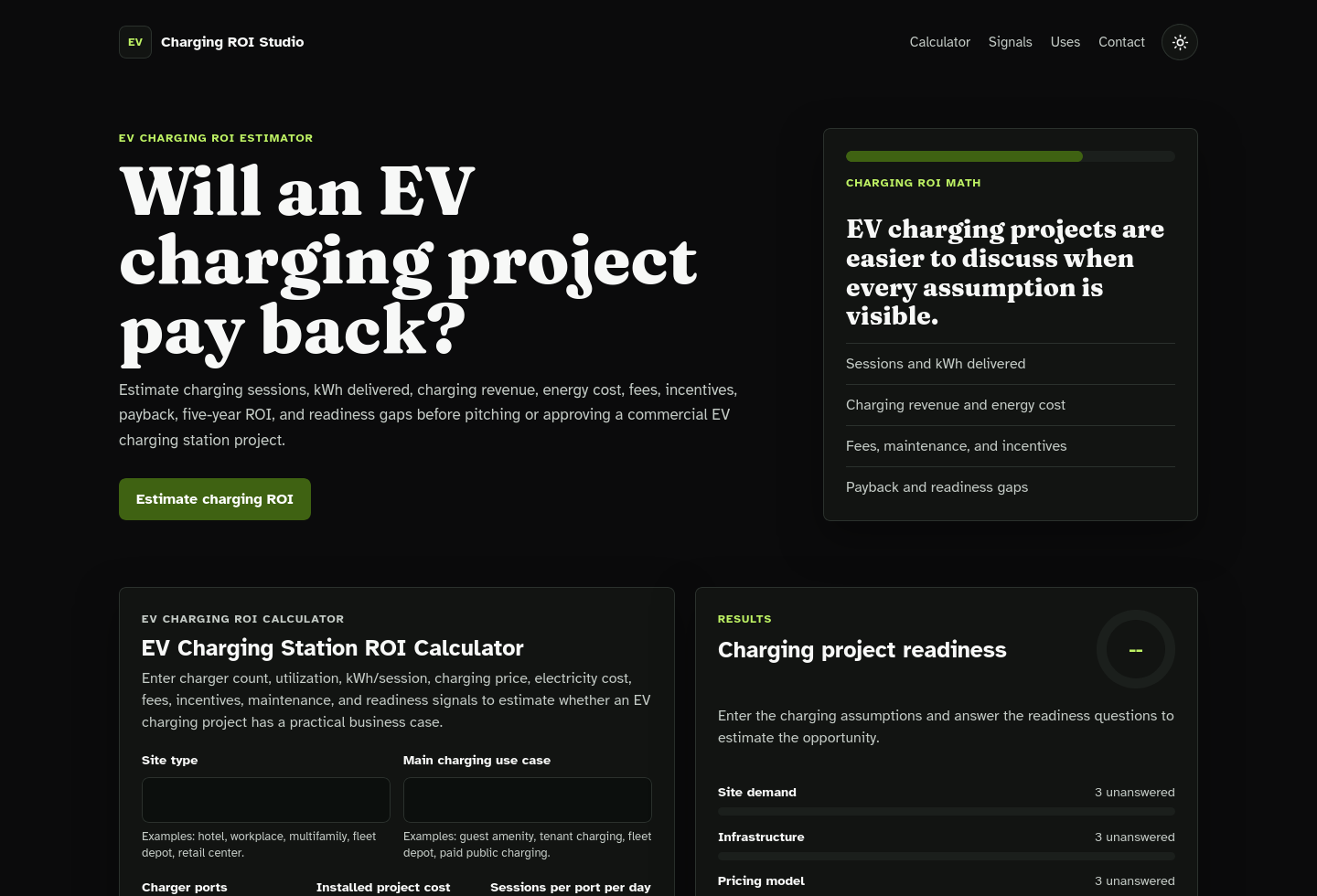
Useful first screen
The visitor gets the solver immediately, with examples and result states that reduce friction.
AI Lead Magnets
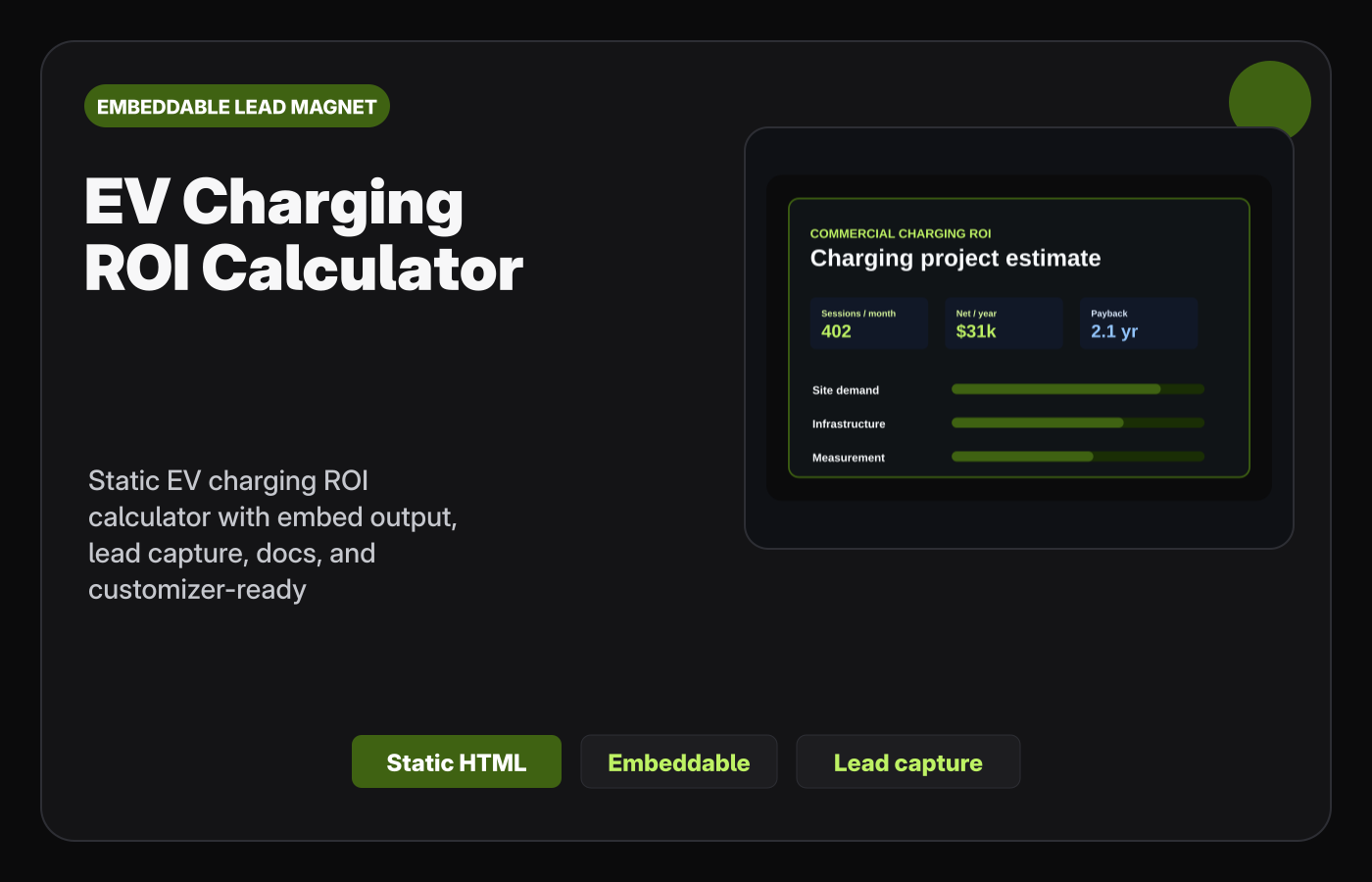
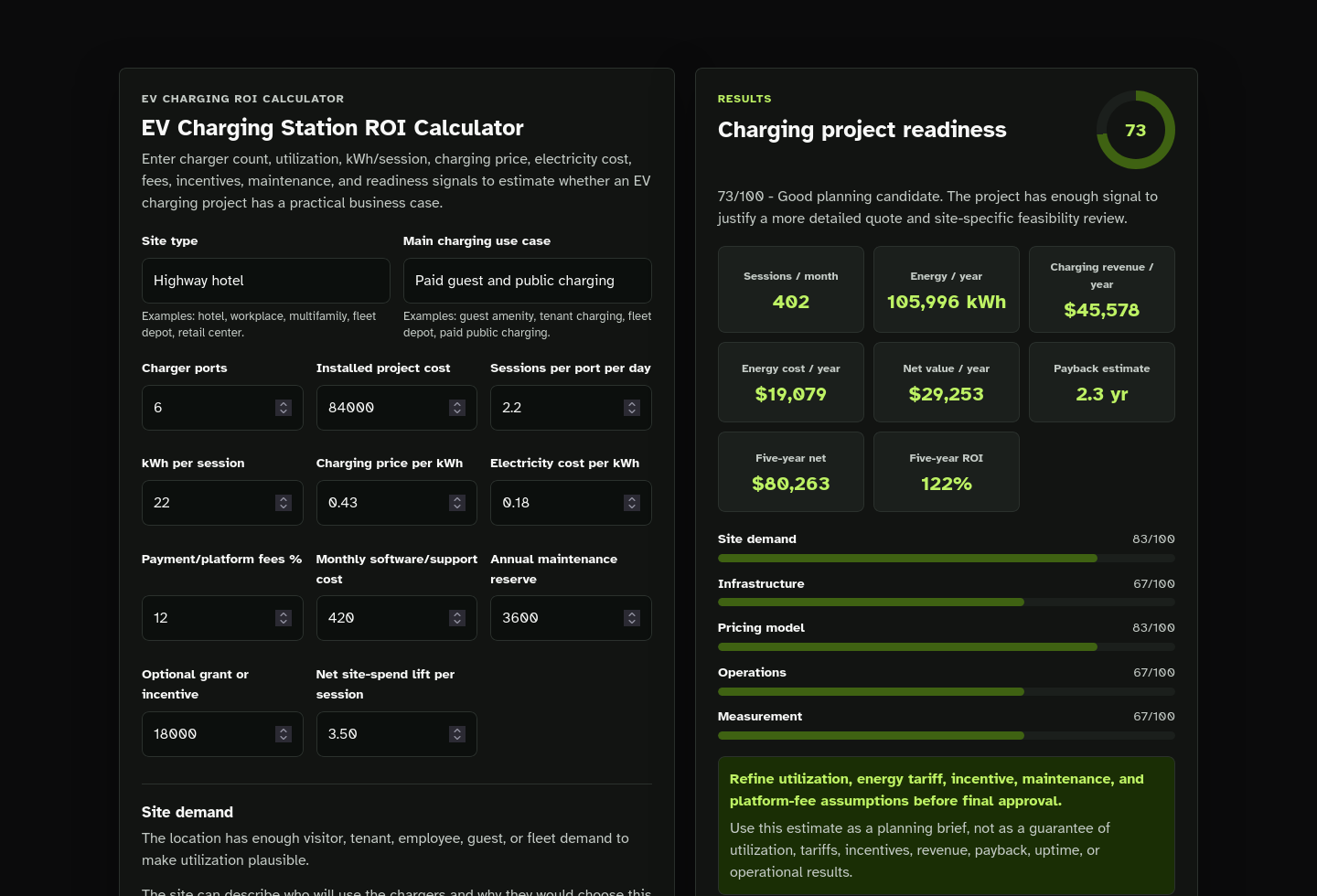
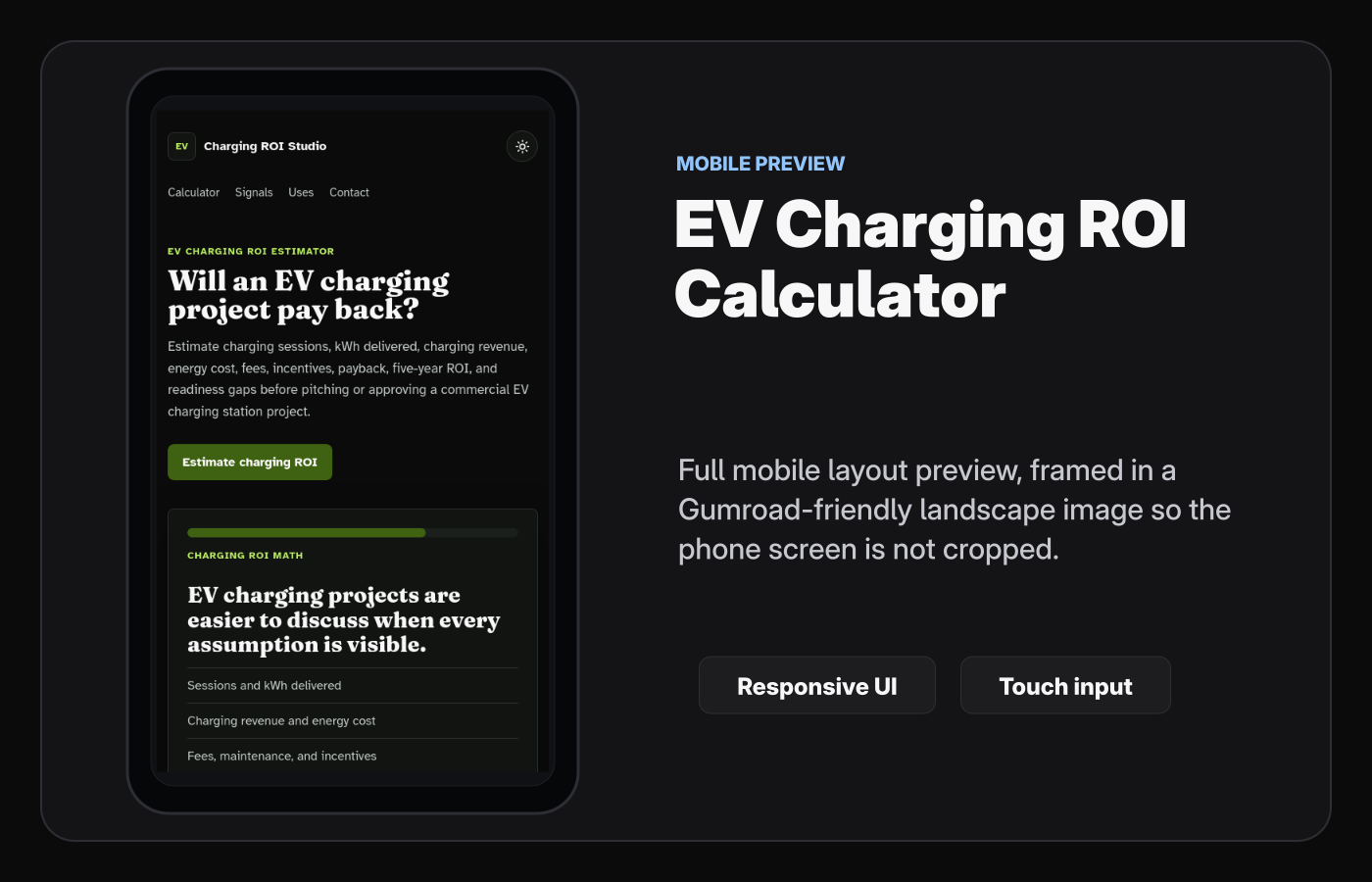
A complete static HTML, CSS, and JavaScript starter kit for a commercial EV charging ROI lead magnet. Visitors enter charger count, utilization, energy cost, pricing, fees, maintenance, incentives, and readiness answers, then get charging revenue, net annual value, payback, five-year ROI, and next steps.
Screenshots
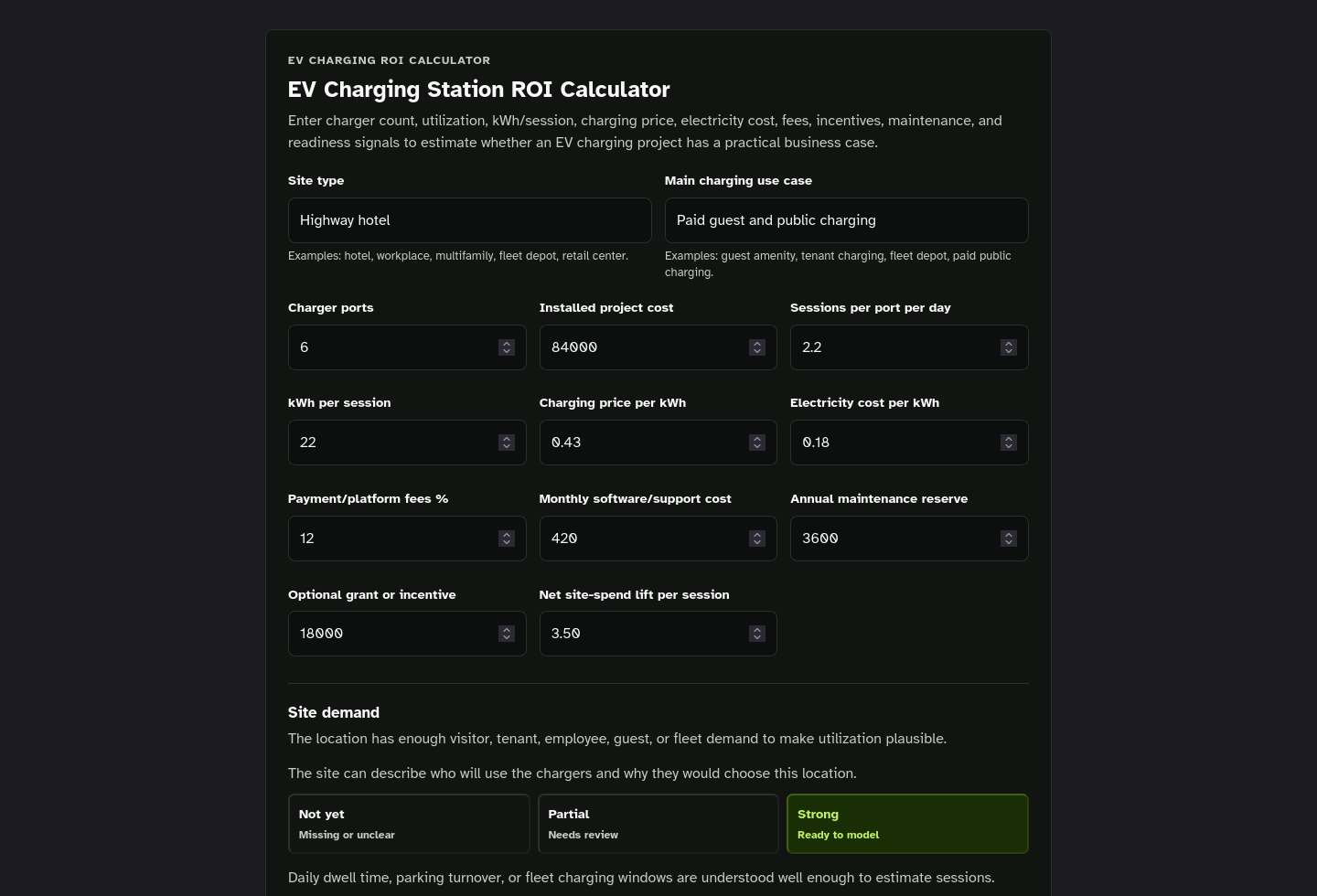
Public previews are shown as screenshots so the paid static files are not exposed as a downloadable live demo.
Why it exists
Launch an embeddable calculator that helps visitors estimate charging sessions, revenue, energy cost, operating fees, incentives, payback, five-year ROI, and readiness gaps before they request a site review or quote.
The visitor gets the solver immediately, with examples and result states that reduce friction.
The generated site can run on ordinary static hosting, with no database or server application required.
Privacy, terms, contact, sitemap, robots, manifest, and service worker files are already included.
Features
Launch workflow
Download the starter kit ZIP from Gumroad or your purchase receipt.
Use the browser customizer to fill in your site details and choose the default theme, then choose whether to include embed.html, its full-site link, and a public embed-code panel.
Connect a form endpoint if you want completed estimates to create leads.
Review the generated homepage, embed page, privacy, terms, contact, sitemap, and manifest files.
Upload the generated static files to your host and test the live site or iframe embed.
Editable details
The placeholder metadata powers the browser customizer, so the package can be customized through a form instead of editing every page by hand.
Comparison
Best for a focused EV charging ROI lead magnet, static hosting, optional lead capture, quick customization, and embeddable tool-only output.
Better when you only need basic math fields, but it usually lacks charging-specific assumptions, readiness scoring, embed output, PWA behavior, metadata, legal pages, and launch docs.
Best when you need custom tariff data, utility integrations, charger-network APIs, accounts, CRM automation, or a fully custom product roadmap.
FAQ
It is a starter kit. You get working source files, customization metadata, license, third-party notices, and an HTML start file that links to versioned setup docs for the companion website customizer.
The package includes an optional embed.html output. It removes the full-page hero, FAQ, footer, and supporting sections so the calculator can be used as a focused iframe or embedded landing-page tool. The generated embed page uses the selected default theme and accent colors, and separate customizer toggles can show a small backlink inside embed.html and a public embed-code panel on the full homepage.
No. The default calculator uses deterministic browser JavaScript. It does not inspect a property, utility bill, electrical system, or charger network automatically.
No. The result is a planning estimate based on visitor inputs, not a guarantee of utilization, energy cost, tariffs, incentives, revenue, payback, uptime, compliance, leads, or operational results.
Lead capture is optional. If enabled, the generated form posts visitor contact details, readiness score, estimate fields, and calculator report to the configured HTTPS form endpoint.
A static website is made from normal files such as HTML, CSS, JavaScript, images, icons, robots.txt, and sitemap.xml. It does not need WordPress, a database, or a custom server app.
A PWA, or Progressive Web App, is a website that can feel more app-like after it is hosted correctly. This kit includes the manifest, icons, and service worker files used for install prompts and offline-friendly caching in supported browsers.
No. Browsers do not install PWAs from file:// pages. You can preview the generated HTML locally, but install behavior and service worker caching should be tested from a local static server or an HTTPS host.
Yes, but ad placement and affiliate copy are your responsibility. The included notes explain policy-safe placement principles and clear disclosure language.
The included code is MIT licensed, so you can modify it, build on it, or use it commercially. Keep your own marketplace rules and third-party obligations in mind.